
24/7 LOCAL SOOT RESPONSE
Puffback Cleanup in Downtown Brooklyn, NY
When an oil burner ignites late, the pressure release can send fine, greasy soot well beyond the mechanical room. Paul Davis Restoration of Brooklyn West provides 24/7 puffback restoration in Downtown Brooklyn, NY, including residue assessment, professional cleaning, odor treatment, contents care, claim documentation, and coordinated repairs. The Brooklyn West crew adapts its plan to high-rise apartments, prewar buildings, offices, hotels, institutional properties, and mixed-use towers.
- 24/7 Live Response
- IICRC Certified
- Insurance Claim Help
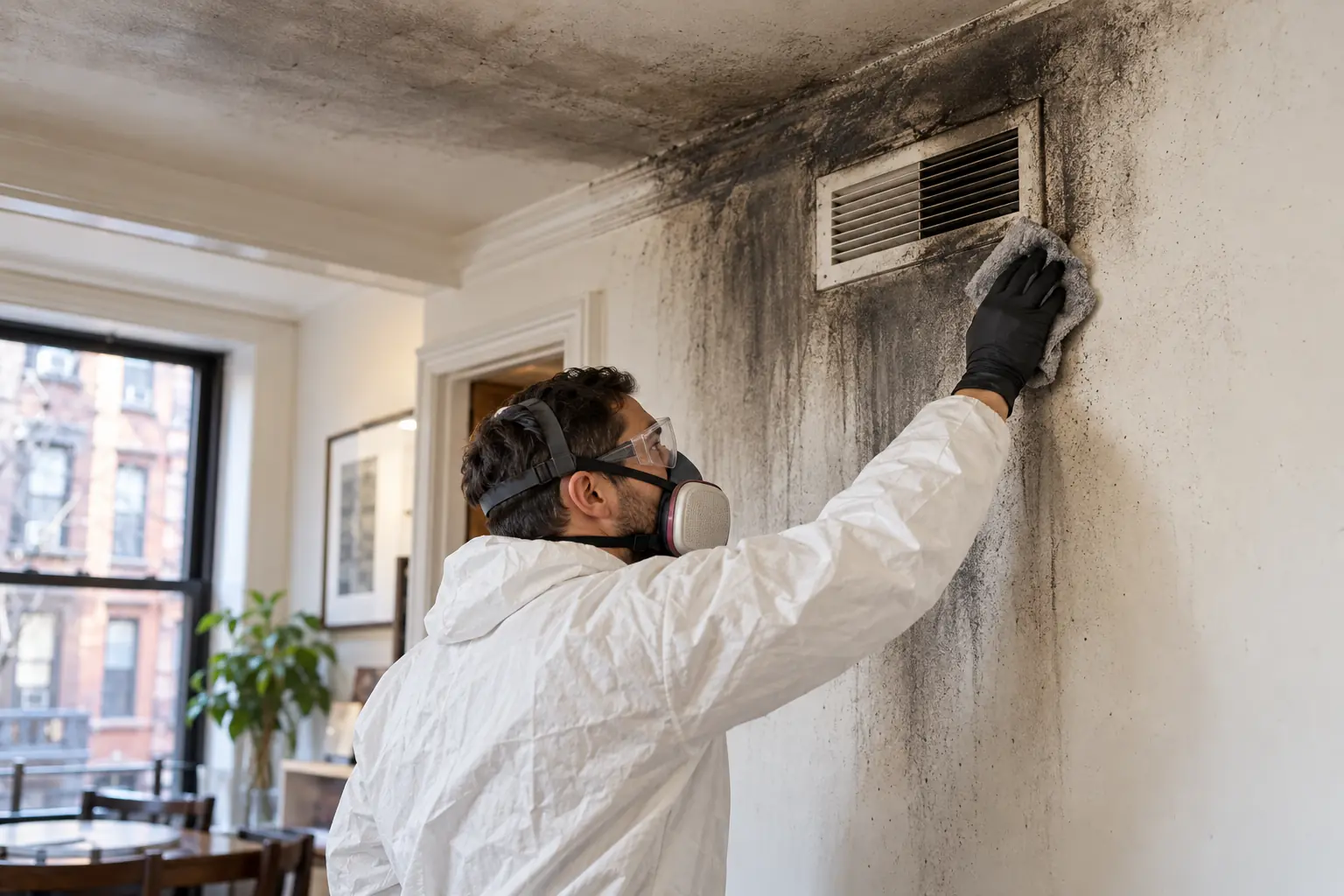
When Things Go Wrong, We Do What's Right
Paul Davis Restoration of Brooklyn West


25+
Years Experience
FURNACE AND BOILER SOOT SPECIALISTS
A Cleanup Plan Built Around Downtown Brooklyn Properties
A puffback happens when unburned fuel accumulates inside an oil-fired furnace, boiler, or water heater and ignites after a delay. The pressure can expel fine carbon and petroleum residue through the appliance, flue gaps, vents, or nearby openings. In Downtown Brooklyn, the resulting contamination may travel through units, utility rooms, service corridors, shared halls, elevator lobbies, and active workspaces. Because particles settle unevenly, the darkest mark is not always the boundary of the loss.
In a dense vertical property, the response must distinguish direct soot impact from ordinary building dust and track every route used by people, equipment, and air movement. Clear zone maps help management understand which units or common areas need work. Professional furnace puffback cleanup begins by mapping that pattern and protecting unaffected rooms. Field technicians evaluate painted interiors, acoustic materials, office furniture, flooring, textiles, electronics, and shared-area finishes, then select products and tools suited to each material. Household water-based cleaners can bind oily soot to a finish, while an ordinary vacuum may blow microscopic particles back into the air.
The goal is not simply to make visible marks disappear. A complete puff back cleanup should remove transferable residue, address the odor source, evaluate belongings, and identify finishes that cannot be returned to an acceptable condition by cleaning alone. For Downtown Brooklyn properties, planning must also account for building management approvals, service-elevator windows, loading rules, security procedures, and work around residents or business operations.
When the incident includes heat damage, smoke outside the unit, or burning outside the heating unit, our fire and smoke damage restoration in Downtown Brooklyn can be incorporated into the same scope. Owners who need broader recovery support can also review our restoration services in Downtown Brooklyn, NY for mitigation, specialty cleaning, and reconstruction.
- Fixtures and finishes chosen to withstand salt-air exposure
- IICRC-certified, background-checked professionals on every job
- 1-year workmanship guarantee from a locally owned, family-operated team
Conditions Our Soot Team Can Address
- Black, gray, or brown oily film on walls, ceilings, doors, trim, and cabinetry
- Shadowing or specks around radiators, registers, light fixtures, ledges, and room edges
- Residue on furniture, rugs, clothing, window treatments, electronics, inventory, or stored goods
- Burnt, smoky, or heating-oil odors that remain after the system is shut down
- Soot movement through units, utility rooms, service corridors, shared halls, elevator lobbies, and active workspaces
- Staining or material damage that requires sealing, repainting, refinishing, or replacement
ORGANIZED HELP FROM THE FIRST CALL
Why Downtown Brooklyn Property Owners Choose Paul Davis
A puffback cleaning company should be able to manage more than surface wiping. Paul Davis Restoration of Brooklyn West combines emergency response, IICRC-certified cleaning, contents coordination, estimating, insurance communication, and repairs. That single-team structure is particularly useful when a Downtown Brooklyn project involves building management approvals, service-elevator windows, loading rules, security procedures, and work around residents or business operations.
24/7 Access to a Trained Professional
Emergency calls are answered around the clock by a trained professional who can gather the facts and explain immediate precautions. For true emergencies in Downtown Brooklyn, the Brooklyn West crew aims to arrive in under two hours when traffic, weather, call volume, safety, and building access permit.
IICRC-Certified Soot Removal
Field technicians use restoration methods intended for small combustion particles and oily residue rather than treating the problem as routine housekeeping. Cleaning tests guide the approach for painted interiors, acoustic materials, office furniture, flooring, textiles, electronics, and shared-area finishes, helping prevent unnecessary damage and avoid spreading soot.
Experience With Brooklyn Building Conditions
The local team routinely plans work around high-rise apartments, prewar buildings, offices, hotels, institutional properties, and mixed-use towers. Its practical Brooklyn property restoration guidance shows how access, contents, and building use influence the response—not just the square footage listed on an estimate.
Insurance Documentation Without Coverage Promises
The Brooklyn West crew can photograph affected areas, document contents, prepare a restoration estimate, and communicate with an adjuster when authorized. Paul Davis explains the work it recommends; the insurance carrier interprets the policy and decides whether coverage applies.
Cleaning and Repairs Under One Scope
If soot staining remains after appropriate testing, the project can continue into sealing, painting, material replacement, or reconstruction. Keeping those steps with one accountable team reduces handoff gaps and preserves the history of what was found in the Downtown Brooklyn property.
Local Ownership and Workmanship Support
Paul Davis Restoration of Brooklyn West is locally and family owned. Clients receive clear explanations, regular progress updates, and project photos when appropriate. Learn more about why property owners choose Paul Davis and the workmanship support behind completed repairs.
CLEANING STRUCTURES CONTENTS AND ODORS
What Our Downtown Brooklyn Puffback Cleanup Service Covers
No two soot releases create the same scope. The plan is based on the source, the routes the residue followed, the materials exposed, and the result of small cleaning tests. In Downtown Brooklyn, that may mean adapting the work to building management approvals, service-elevator windows, loading rules, security procedures, and work around residents or business operations. Structural cleaning, contents decisions, deodorization, and finish restoration are documented together so the owner can see how each part supports the complete recovery.
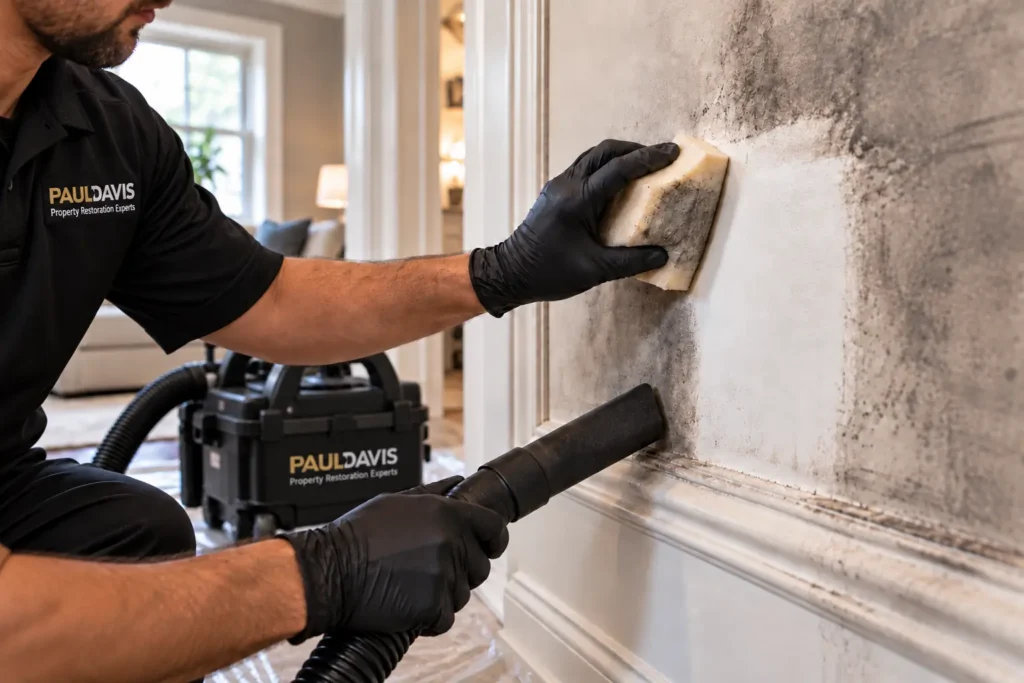
Surface-Specific Soot and Smoke Damage Cleanup
Puffback soot removal starts with controlled capture of loose particles using suitable filtration. Bonded residue is then addressed with dry chemical sponges, restoration chemistry, or other professional products selected for the material. The crew does not assume that painted interiors, acoustic materials, office furniture, flooring, textiles, electronics, and shared-area finishes can all tolerate the same chemistry or agitation. Test areas establish a safe method before production cleaning expands.
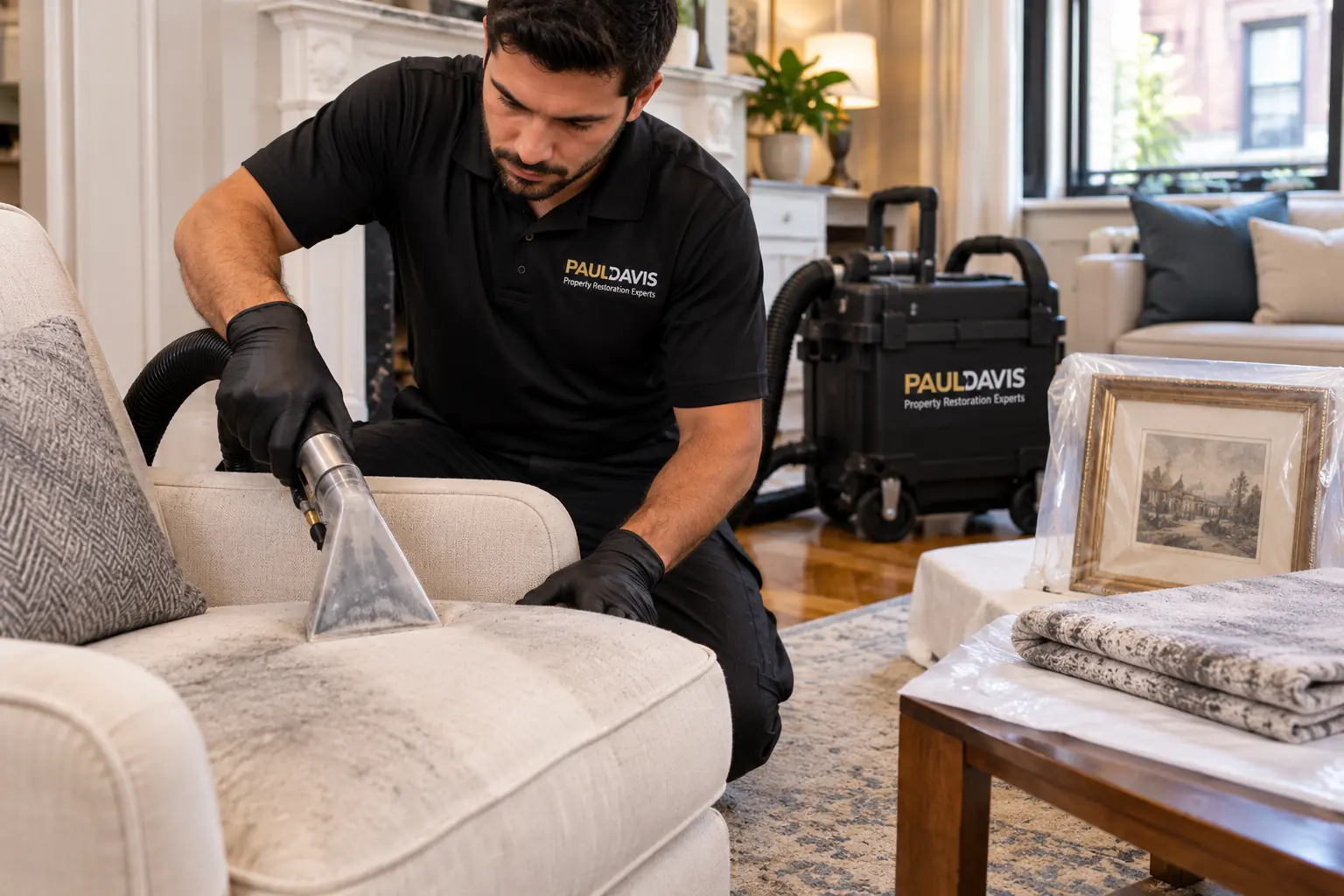
Contents Cleaning, Pack-Out, and Textile Coordination
Belongings are evaluated by material, condition, replacement value, and the practical benefit of restoration. Our contents cleaning services in Downtown Brooklyn may include item documentation, careful packing, cleaning or specialty-vendor coordination, secure storage when needed, and an organized return. Items that remain on site are protected from work-zone traffic and cross-contamination.
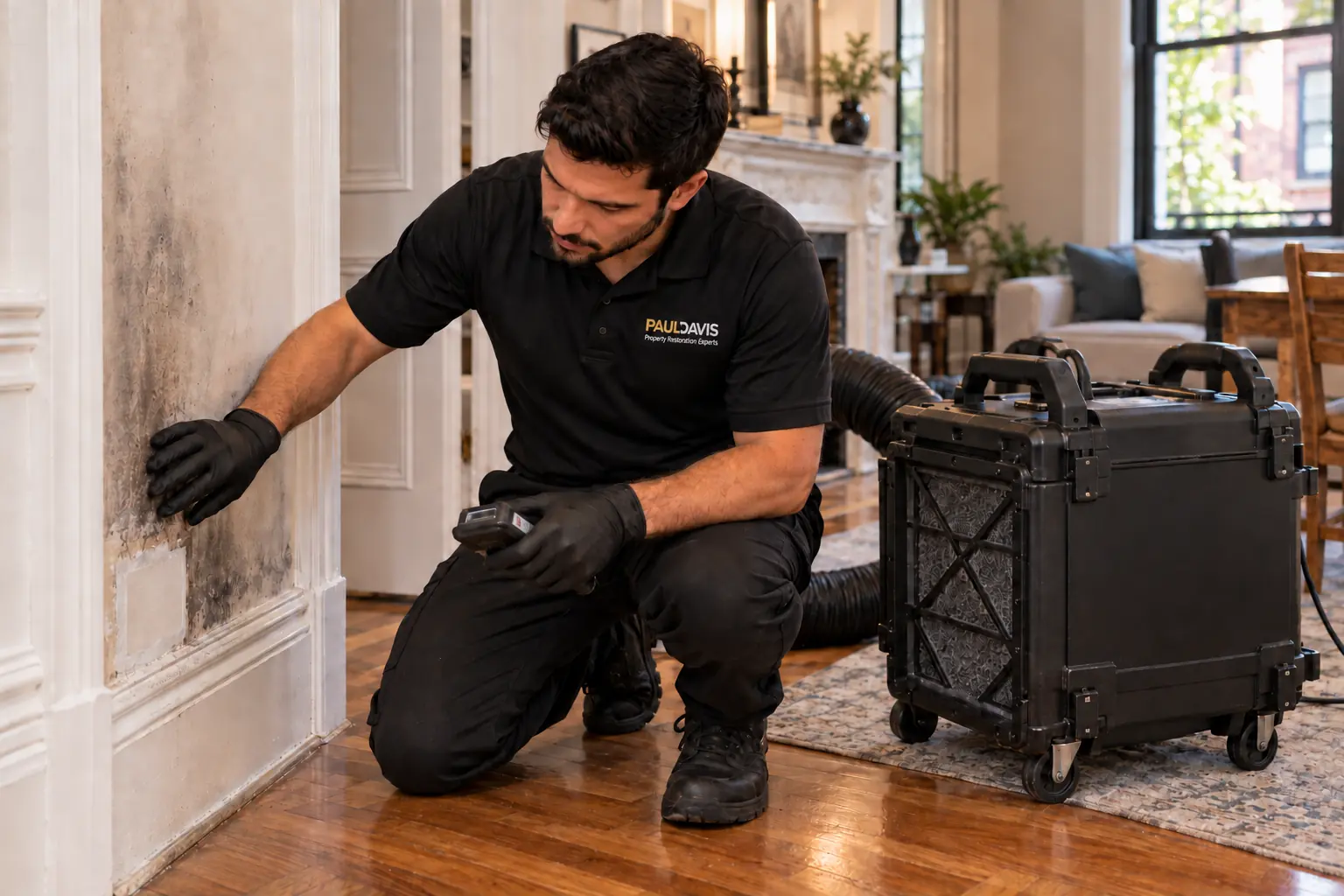
Odor Treatment and Soot Damage Restoration
Deodorization follows source removal because fragrance alone cannot correct petroleum residue. After cleaning, field technicians reassess odors, staining, and material condition. Porous assemblies that remain contaminated may need sealing or replacement; damaged paint, plaster, drywall, flooring, cabinetry, or trim can then move into soot damage restoration and approved reconstruction.
Do Not Spread The Residue
Why DIY Puffback Cleaning Can Increase the Damage
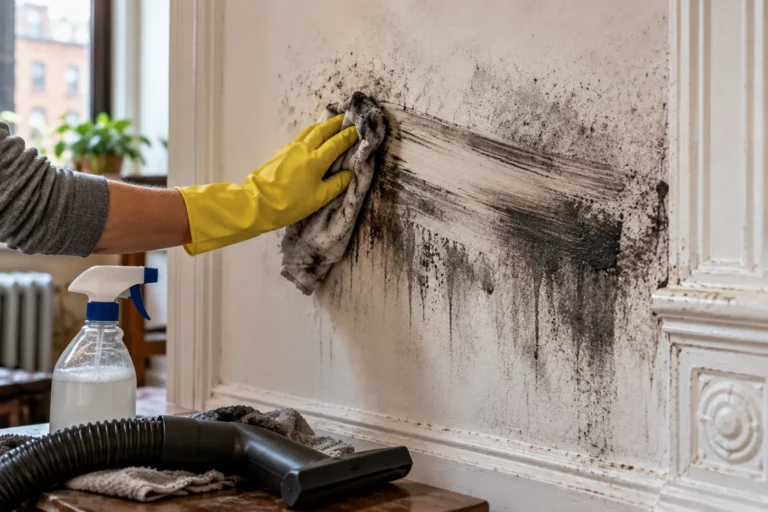
Puffback residue transfers easily from a wall to a cloth, from a shoe to clean flooring, or from one garment to an entire laundry load. Avoid wet-wiping, scrubbing, spraying household degreasers, turning on portable fans, or using a vacuum without HEPA filtration. In Downtown Brooklyn, uncontrolled movement through units, utility rooms, service corridors, shared halls, elevator lobbies, and active workspaces can enlarge the work area before a professional assessment begins.
If it is safe, stop operating the affected appliance and keep people and pets away from visibly contaminated rooms. A licensed heating-system contractor should diagnose and repair the burner, ignition, fuel-delivery, chimney, draft, or venting problem. The restoration company cleans the property and repairs damaged materials; it does not replace the HVAC professional’s mechanical evaluation.
A well-supported claim begins with timely notice, clear photographs, and a scope that separates cleaning from necessary repair. Report the loss promptly, preserve maintenance and service records, and ask whether the carrier wants an inspection before cleaning or disposal. Paul Davis can support a puff back insurance claim with photographs, estimates, inventories, and work records. It can also coordinate documentation used in furnace puff back insurance claims, but only the responsible carrier can approve or deny coverage.
Six Warning Signs That Merit Prompt Attention
- A bang, rumble, hesitation, or hard start when the furnace or boiler cycles
- Fresh black dots, gray shadows, or streaks near ceilings, radiators, vents, or doors
- A greasy film that smears when touched instead of lifting like non-oily dust
- A burnt, smoky, or heating-oil odor after the heating equipment runs
- New soot on shelves, counters, fabrics, belongings, or rooms away from the appliance
- Repeated resets, smoke outside the unit, or recurring ignition trouble at the heating unit
A DOCUMENTED START TO FINISH APPROACH
Our Four-Step Puffback Restoration Process in Downtown Brooklyn
01
Triage, Safety Questions, and On-Site Inspection
The first conversation covers what the occupants heard or smelled, when the system last ran, where marks are visible, and whether anyone has safety concerns. At the property, field technicians follow the suspected soot path through units, utility rooms, service corridors, shared halls, elevator lobbies, and active workspaces, note sensitive materials, and identify conditions that require a heating professional or another specialist.
02
Protect Unaffected Areas and Document the Scope
Controlled work areas and movement routes are established before broad cleaning. The Brooklyn West crew photographs conditions, records affected rooms and contents, tests representative surfaces, and plans around building management approvals, service-elevator windows, loading rules, security procedures, and work around residents or business operations. Owners receive a practical explanation of what appears cleanable, what needs further evaluation, and what may require repair.
03
Capture Particles, Clean Materials, and Address Odor
Loose particulate is removed with appropriate filtration before field technicians address bonded residue. Procedures are adjusted for painted interiors, acoustic materials, office furniture, flooring, textiles, electronics, and shared-area finishes. Contents are cleaned in place or moved through a documented pack-out when appropriate. Odor treatment follows removal of the soot source so it is not used merely to cover a persistent smell.
04
Verify Results, Coordinate Repairs, and Walk Through
The assigned coordinator reviews cleaned surfaces for transferable residue, visible staining, and lingering odor. The Brooklyn West crew explains any recommended sealing, refinishing, replacement, or reconstruction, coordinates approved work, and closes the project with a final walkthrough and completion documentation.
A Calmer Restoration Experience
Hear From Brooklyn West Customers

OUR SERVICE AREA
Serving Downtown Brooklyn, NY and Beyond
Paul Davis Restoration of Brooklyn West serves residents, landlords, facilities teams, co-op and condo boards, office managers, and commercial tenants in Downtown Brooklyn. Local planning accounts for building management approvals, service-elevator windows, loading rules, security procedures, and work around residents or business operations. That context helps the Brooklyn West crew choose realistic controlled work areas, equipment routes, contents procedures, and communication steps instead of applying a generic residential checklist to every property.
Brooklyn | Park Slope | Dumbo | Downtown Brooklyn | Brooklyn Heights | Red Hook | Carroll Gardens | Cobble Hill | Kensington | Bensonhurst | Bay Ridge | Sunset Park | Brighton Beach | Mill Basin | Boerum Hill
Explore the complete Brooklyn West service area to see where the local team provides emergency mitigation, specialty cleaning, and repair support.
PUFFBACK CLEANUP QUESTIONS
What Downtown Brooklyn Property Owners Often Ask
What is a puffback?
The term puffback describes what happens when delayed ignition produces a small internal explosion in an oil furnace, boiler, or water heater. That pressure releases partly burned fuel and fine carbon into the surrounding space. Marks may look powdery at first even though the petroleum component makes them easy to smear.
What can cause an oil furnace puff back or boiler puffback?
Mechanical and venting issues can both play a role: examples include a fouled burner, damaged ignition parts, a clogged burner nozzle, poor chimney draft, or excess fuel entering the chamber. Only on-site testing by a qualified heating specialist can establish the actual failure and required repair.
How far can soot travel through a Downtown Brooklyn property?
A contained puffback may stay near the heater, while a stronger release can affect several rooms or levels. For local buildings, the likely route may run through units, utility rooms, service corridors, shared halls, elevator lobbies, and active workspaces. The practical boundary is established through visual review, wipe testing when appropriate, odor observations, and the pattern on finishes and belongings.
Can I clean puffback soot myself?
Ordinary housekeeping tools are not designed for petroleum-based soot. A wet cloth can create a dark halo, while carrying bags or textiles through clean rooms can transfer residue. In spaces containing painted interiors, acoustic materials, office furniture, flooring, textiles, electronics, and shared-area finishes, stop first, limit traffic, and obtain material-specific cleaning guidance.
Is a puff back covered by insurance?
Whether insurance pays changes with the specific contract and facts of the loss. Sudden accidental damage may qualify, yet exclusions or deferred-maintenance findings can change the outcome. Preserve the scene when safe, notify the carrier, and keep heating-service paperwork. A restoration scope gives the adjuster concrete damage information.
What affects puffback cleanup cost in Downtown Brooklyn?
Puffback cleanup cost is calculated from the actual contamination pattern and restoration method, not from one flat rate. In this neighborhood, important factors include the number of units or floors, after-hours access, elevator and loading requirements, sensitive electronics, common-area protection, and repair approvals. The estimate should separate structural cleaning, contents work, odor treatment, and repair so the owner can understand each component.
How long does professional soot puffback cleaning take?
There is no universal number of days. The crew considers contamination, labor, material sensitivity, pack-out needs, odor persistence, and repair approvals. Because building management approvals, service-elevator windows, loading rules, security procedures, and work around residents or business operations may influence a Downtown Brooklyn job, the manager establishes realistic work windows and communicates changes instead of offering an unsupported completion promise.
How can I reduce the risk of another heating-system puffback?
Before sustained winter operation, use the following approach: Keep scheduled heating-service records, act on ignition or draft problems, maintain clear mechanical access, and coordinate required inspections with building management before peak heating demand. Treat unusual sounds, repeated lockouts, smoke, or odor as service warnings. A qualified contractor can test combustion and venting, while the restoration team should be called if the unit has already discharged soot into the building. For Downtown Brooklyn owners and managers, furnace maintenance before heating season is a practical puffback prevention baseline.
Do you provide emergency puffback cleanup near me in Downtown Brooklyn?
Yes. The Brooklyn West office accepts urgent calls at all hours for Downtown Brooklyn and nearby service areas. The first conversation covers safety, appliance status, visible spread, occupancy, and access. Arrival timing varies with active emergencies, traffic, weather, and site conditions, but immediate telephone guidance can begin right away. People searching for “puffback cleanup near me” can contact the local office directly.
What happens if cleaning cannot remove every stain?
Residual staining does not automatically mean the earlier work failed; some soot penetrates or alters a finish. The Brooklyn West crew records what was attempted, discusses the expected appearance, and develops a repair option for approval. That may involve stain-blocking primer, finish coating, millwork repair, or replacement of an unsalvageable assembly.
Stop Oily Soot From Spreading Through Your Property
Prompt assessment can protect clean areas, preserve useful insurance documentation, and identify which surfaces and belongings need specialized care. Contact the Brooklyn West team for 24/7 puffback restoration in Downtown Brooklyn, NY.
Talk with a Trained Professional
Request Puffback Cleanup in Downtown Brooklyn, NY
Tell the Brooklyn West crew when the heating event occurred, which rooms show soot or odor, whether the appliance is off, and how the property is occupied. A local professional will review the situation and recommend the next step. You can also contact Paul Davis Restoration of Brooklyn West for scheduling, emergency guidance, or a project estimate.